Back to all
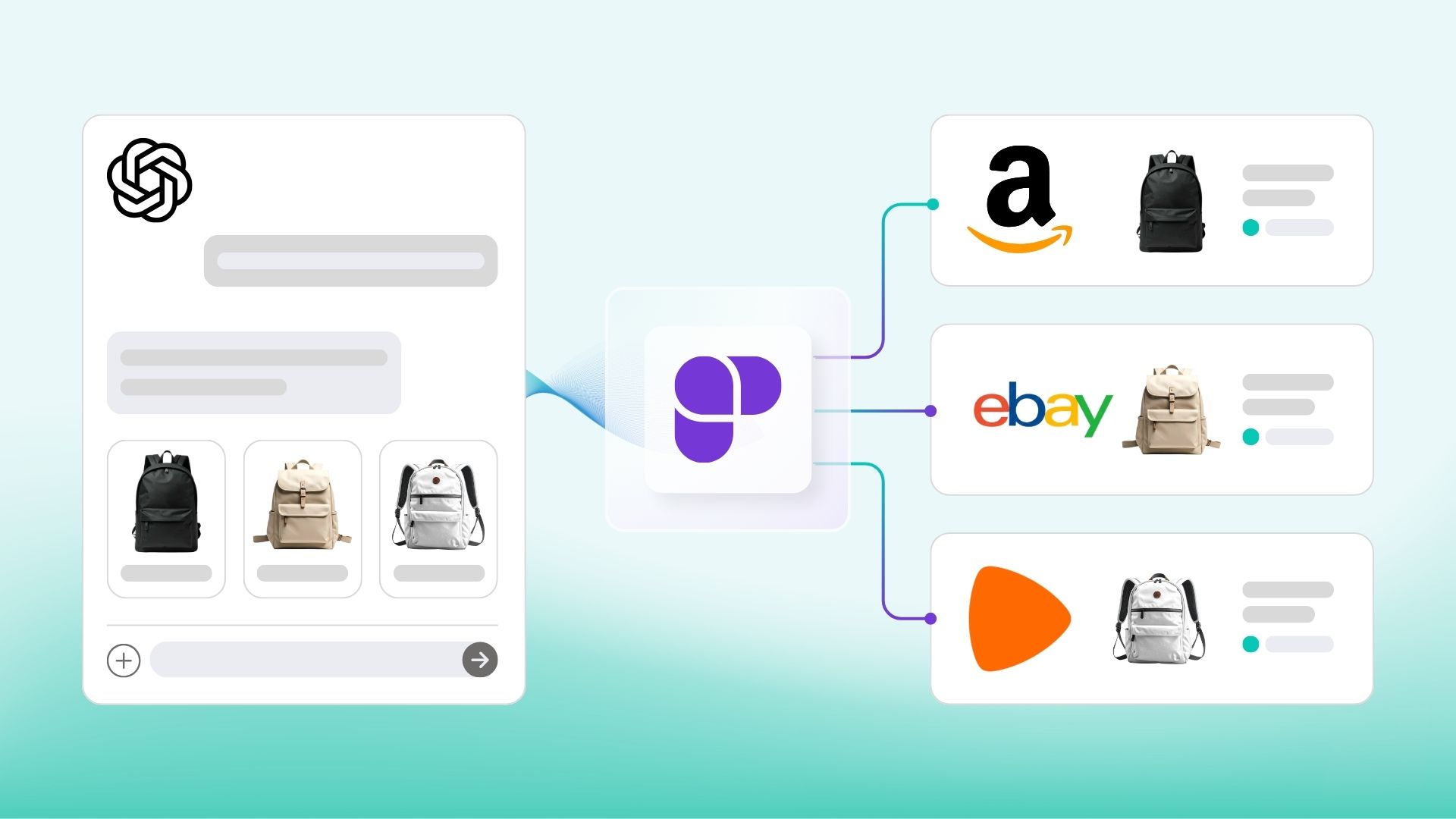

ChatGPT ads in Europe run on the same OpenAI ad system as in the U.S., but the system knows less about each shopper. U.S. ads can be personalized with a shopper’s chat history and ad interactions. In the 31 European markets that went live on August 24, 2026, personalized ads aren’t available yet.
European ads match on the current conversation plus basic context such as location and language. For product feed ads, which ChatGPT builds from your catalog, that puts more of the match on your feed.
At a glance
- U.S.: With ad personalization on, the ad system can draw on a shopper’s wider ChatGPT history. Merchants in OpenAI’s merchant program can also send a feed that powers organic shopping results for U.S. users.
- Europe (EEA and Switzerland): Ads match on the current conversation, approximate location, device, time of day, and language. Shopping results built from merchant feeds don’t reach users there yet.
- Pace: ChatGPT ads went from a CPM-only U.S. pilot in February to self-serve buying in 63 countries. CPC bidding, conversion bidding, a Conversions API, and product feed ads arrived along the way.
- Peak season: Product feed ads pull their text and images from your catalog, and OpenAI processes feed updates asynchronously. Fixes need to land well before Black Friday, November 27.
How do ChatGPT ads work in Europe?
ChatGPT ads in Europe are contextual for now. OpenAI’s Europe privacy policy says these generic ads use the context of the current chat, location, time of day, and device type. Past chats and memory stay out, and OpenAI says personalized ads are not initially available in the EEA or Switzerland.
Ads went live across the EEA and Switzerland, 31 markets, on August 24, 2026, in what OpenAI called its largest expansion to date. Self-serve Ads Manager opened there on August 31, alongside OpenAI’s Ads Solutions team and agency partners. OpenAI’s GDPR basis for these generic ads is legitimate interest, and personalized ads, once offered, will need each user’s consent.
The U.K. launched separately, in June 2026, and OpenAI’s carve-out on personalized ads names only the EEA and Switzerland. Its Europe privacy policy covers U.K. users too and makes consent the basis for them.
Merchant feeds don’t reach European shoppers yet, because OpenAI shows feed-powered shopping results only to U.S. users. Organic answers in Europe still draw on crawled pages and third-party product data. The ads feed is the only catalog you can send OpenAI directly for European shoppers.
Why the product feed carries more weight in Europe
Without personal history, OpenAI matches the live conversation against what advertisers supply: product data, landing pages, context hints, and targeting. Relevance and bids then set the order among eligible ads.
In a product feed campaign, the feed supplies most of that material, and Europe gives the system fewer user signals to weigh beside it. That makes the EEA the clearest read on how a feed performs on its own.
Language is one of the few signals left, and OpenAI says an ad’s language may differ from the conversation’s. A Text Customization setting, on by default, lets OpenAI generate translated and personalized versions of your headlines and descriptions, which may run without your review. Translation can’t fix a price in the wrong currency or a landing page in the wrong language.
Each product in an ads feed carries its own target countries and currency, and its landing page comes from the feed too. Send each market a feed with local prices, sizing, and landing pages in that market’s language.
How do ChatGPT ads target shoppers in the U.S.?
OpenAI says its ad system selects ads on expected relevance and outcomes. It weighs the current conversation, the ad’s landing page, title, and copy, and the context hints and targeting the advertiser sets. With ad personalization on, it can also use the shopper’s past chats, memory, and responses to earlier ads.
OpenAI counts hides and engagement among those personalization signals, so a U.S. shopper’s reaction to your ad can shape the ads they see next.
The U.S. also has an organic route that Europe lacks. ChatGPT shopping results built from merchant feeds run for U.S. users, separately from ads. Ads can’t change those organic recommendations, which ChatGPT ranks on factors such as price and availability.
How do ChatGPT ads in the U.S. and Europe compare?
Two differences are structural: personalization and feed-powered shopping results. The rest is launch timing.
| Detail | U.S. | EEA and Switzerland |
| Ads live since | February 9, 2026 | August 24, 2026 |
| Self-serve Ads Manager | Beta open to U.S. businesses since May 5, 2026 | Open since August 31, 2026 |
| Personalized ads (past chats, memory, ad interactions) | Available when the user has personalization on | Not initially available; consent required once offered |
| Merchant feeds that reach shoppers | Organic shopping feed and ads feed | Ads feed only |
As of October 19, 2026. Sources: OpenAI’s Help Center, Europe privacy policy, Europe launch announcement, and merchant page; PPC Land for the U.S. Ads Manager date.
What has OpenAI added to ChatGPT ads since launch?
Between February and October 2026, OpenAI turned a CPM-only U.S. pilot into a self-serve performance channel. OpenAI sells it on intent. Its David Dugan told reporters at Cannes Lions in June that roughly 20% of ChatGPT queries carry direct commercial intent, by OpenAI’s own count.
| Date (2026) | What shipped |
| February 9 | U.S. pilot launches, sold on CPM through OpenAI and agency partners |
| March 26 | Ads expand to Canada, Australia, and New Zealand |
| May 5 | Self-serve Ads Manager beta opens to U.S. businesses, with cost-per-click bidding, a Conversions API, a pixel, and no minimum spend |
| May 12 | Product feed ads turn a connected catalog into ads |
| June 5 | Conversion-optimized campaigns roll out, with campaign and ad IDs appended to landing page URLs |
| June to August | Ads launch in the U.K., Japan, South Korea, Mexico, and Brazil |
| August 24 | Ads go live in 31 European markets |
| August 31 | Self-serve buying opens across Europe, India, the Middle East, and North Africa |
| September | A Text Customization setting, on by default, lets OpenAI generate translated and personalized ad text |
| October | New measurement partners, a redesigned Conversions page, weekly performance emails, and tests of wider ad cards and larger images |
Rithum has worked in product feeds and performance marketing for more than 25 years, and in retail media since the category’s earliest programs. Search and shopping ads added the same pieces over two decades. The last of them, ads generated from a product catalog, moved the work from campaign setup to product data.
Matching each release as it ships keeps your team reacting to OpenAI’s roadmap. The catalog carries from one release to the next. OpenAI’s October tests of wider ad cards and larger images reuse advertisers’ existing assets, which for a product feed campaign means your feed images.
The same catalog feeds your marketplaces, retail media, search campaigns, and your own site, so fixes made for ChatGPT pay off on those channels too.
What should you fix in your product feed before Black Friday?
ChatGPT assembles each product feed ad from a template you set, filling in the title, description, price, image, and landing page from your feed. Most of the work before Black Friday, November 27, 2026, is market-specific:
- A feed per market. Each product carries its target countries and a price with a currency code, so each European market needs its own local prices.
- Landing pages in the shopper’s language and currency. The feed supplies each product’s URL, and OpenAI weighs the landing page when it picks ads.
- Product filters and custom labels that keep items you can’t ship to a market out of that market’s ad groups.
- A call on Text Customization. Left on, it lets OpenAI generate new versions of headlines and descriptions without your review. Turn it off per campaign if brand or legal sign-off requires it.
- Main images that hold up at full width, a size OpenAI is testing on mobile.
- Price and stock updates sent early. OpenAI processes feed changes asynchronously, so Black Friday prices need time to clear before traffic peaks.
Titles and attributes still follow the standard for a good product feed on every other channel. Plan inventory and ad budgets for peak season on the same timeline.
Where Rithum fits
Rithum’s ChatGPT Ads Feed runs in the U.S. and EMEA, plus select APAC markets. Rithum Product Feeds builds each market’s feed from one source catalog, with that market’s language, currency, taxonomy, and sizing, across 900+ channels.
When a channel changes its requirements, RithumIQ maps your catalog data to match, so adding a European market doesn’t start a new feed build.
See how Rithum Product Feeds gets your catalog ready for ChatGPT and every other channel.
FAQ
Are ChatGPT ads available in Europe?
Yes. ChatGPT ads went live on August 24, 2026, in 31 markets: the 27 EU member states plus Iceland, Liechtenstein, Norway, and Switzerland. OpenAI launched ads in the U.K. separately in June 2026.
Can a U.S. brand run ChatGPT ads in Europe?
Yes. Self-serve eligibility depends on the country of the legal entity that advertises and pays, and the U.S. qualifies. Campaign targeting then decides where the ads run.
Are ChatGPT ads in Europe personalized?
Not in the EEA or Switzerland yet. Ads there use the current chat, location, time of day, and device type, and personalized ads will need each user’s consent once OpenAI offers them. In the U.S., users with ad personalization on can get ads shaped by past chats, memory, and ad interactions.
Do merchant feeds power ChatGPT shopping results in Europe?
Not yet. OpenAI shows merchant-feed shopping results to U.S. users only and says more regions will follow. Products can still appear in European answers through crawled pages and third-party product data.
Who sees ChatGPT ads?
Users on the Free and Go plans, including logged-out visitors. Plus, Pro, Business, Enterprise, and Edu accounts don’t get ads. Neither do accounts identified as belonging to someone under 18, and Temporary Chats never show them.
When did ChatGPT ads launch?
OpenAI began testing ads in the U.S. on February 9, 2026. Product feed ads followed on May 12, and OpenAI now lists 63 countries where advertisers can buy through self-serve Ads Manager.