Back to all
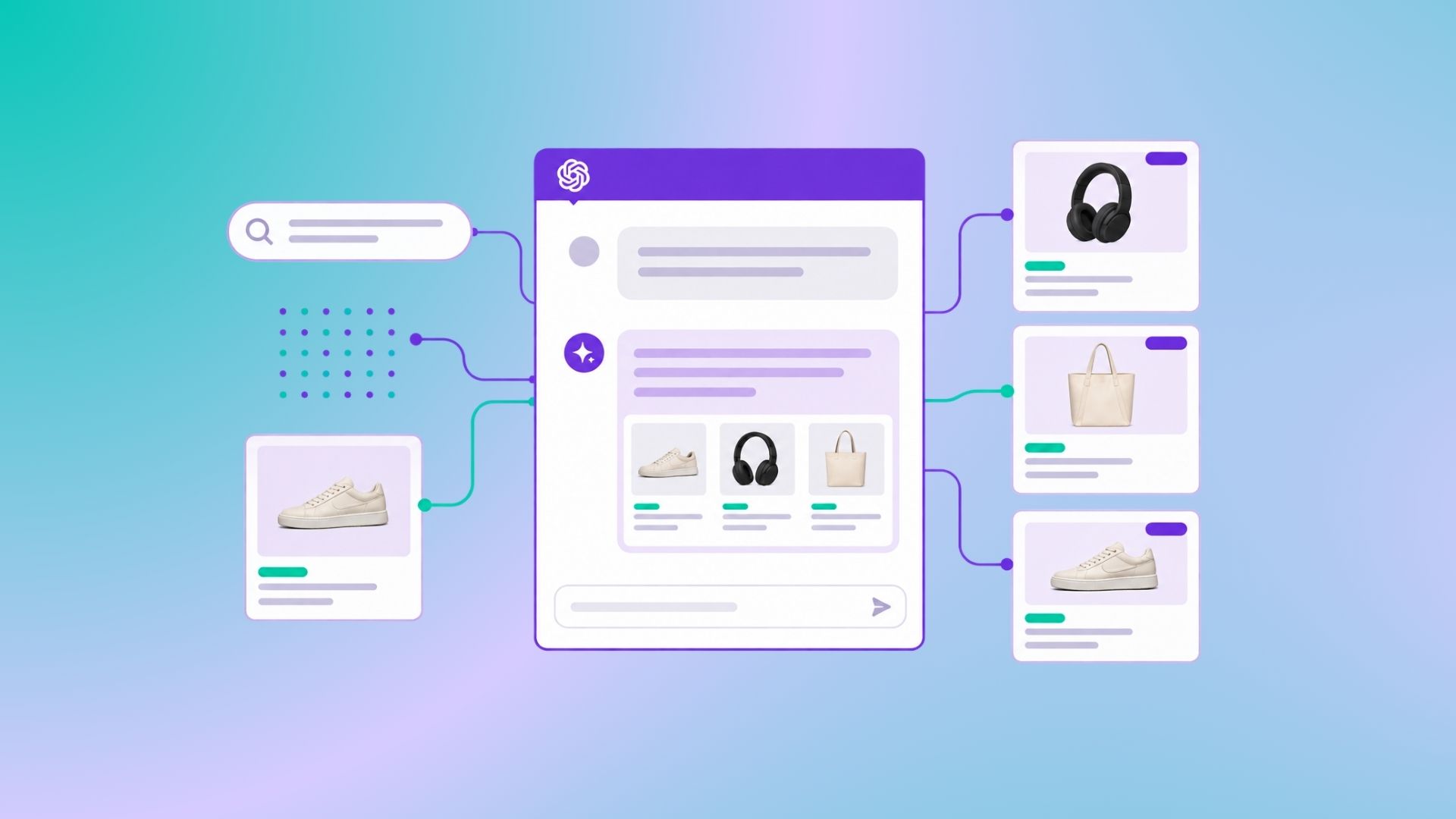

Ads Manager runs two campaign types. Standard campaigns work the way you’d expect, with a headline, description, image, and landing page you build yourself. Product feed campaigns are sponsored product placements that appear beneath ChatGPT’s responses, generated directly from a brand’s product feed. A brand connects its catalog, sets rules for which products are eligible, and the platform assembles the ad from product names, images, and attributes, matched to what the user is asking about in that conversation.
ChatGPT product ads use the same feed pipeline as shopping ads
On a traditional search or shopping platform, a typed query matches against a feed’s titles, attributes, and bid strategy, and an ad gets assembled and served. Inside a ChatGPT conversation, the trigger is a live exchange rather than a typed query, and the platform decides which products are eligible from what the user is trying to do.
Treat ChatGPT ads as an unfamiliar channel and you pay for new creative rules and a measurement framework built from scratch. Start instead from what already works (clean titles, complete attributes, accurate pricing, GTIN completeness) and spend the new effort on how conversational context reshapes eligibility. The bar is the same one a feed has to clear for 900+ other channels.
ChatGPT ad scale as of September 2026
- OpenAI’s ad business crossed a $1 billion annualized revenue run rate in less than 200 days after launch. Axios has reported a $2.5 billion advertising revenue target for 2026, citing investor presentations.
- ChatGPT ads run in more than 60 countries through OpenAI’s ads team and its agency and technology partners. Self-service buying in Ads Manager opened on August 31, 2026 across India, Europe, the Middle East, and North Africa, on top of the original U.S. rollout. OpenAI’s help center carries the current self-service country list.
- ChatGPT reaches more than 1 billion weekly active users, according to OpenAI.
- OpenAI has published two early outcome examples. One ecommerce advertiser reported 3x return on ad spend across its campaigns over 28 days, and a technology partner reported that more than 80% of ad-driven ChatGPT traffic came from new customers.
A channel at that scale inside its first year is past pilot stage. Run rate annualizes current monthly revenue, so read it as pace rather than money booked. You need a clean, structured feed to start, and most retail and brand teams have already half-built one for other channels.
“Brands and retailers should be testing ChatGPT ads now. Consumers are already changing how they research and buy.”
Nick Szeto, Senior Manager, Advertising Account Management, Rithum
Targeting and measurement in ChatGPT ads remain limited
ChatGPT ads are not a drop-in replacement for what you already run. Targeting runs on conversational context rather than keyword match types. OpenAI names platform targeting, geographic targeting, and custom audiences, and says the ads system may draw on a user’s broader ChatGPT context where their country and settings allow.
Measurement runs on the OpenAI Pixel and the Conversions API, with the attribution window set per campaign. View-through reporting, where available, uses a one-day window after an eligible impression, and click-through takes precedence when both apply. View-through does not feed bidding or optimization.
The 30-day figure circulating in coverage is the pixel’s first-party cookie expiry, which OpenAI’s documentation separates from attribution windows. Teams used to the reporting depth of a mature search or social account will find the tooling here early.
Test whether your product data is ready for a channel that will mature quickly. That comes down to the state of your product data everywhere it lives.