Back to all

Second in a series on building stronger AI-driven commerce with Rithum
At a glance
- AI shopping agents evaluate your product data before they evaluate your brand. Incomplete or poorly structured catalogs get excluded from recommendations before a shopper sees them.
- Most brands still rely on AI platforms scraping their product pages. Direct, structured feeds give you control over how products are represented inside AI environments.
- Reaching an AI response and earning the recommendation are different problems. Without visibility into AI platform performance, improving placement becomes guesswork.
- Payment infrastructure inside AI shopping environments is being built now. Brands that address the earlier stages will be positioned to capture those transactions as they scale.
What is agentic commerce?
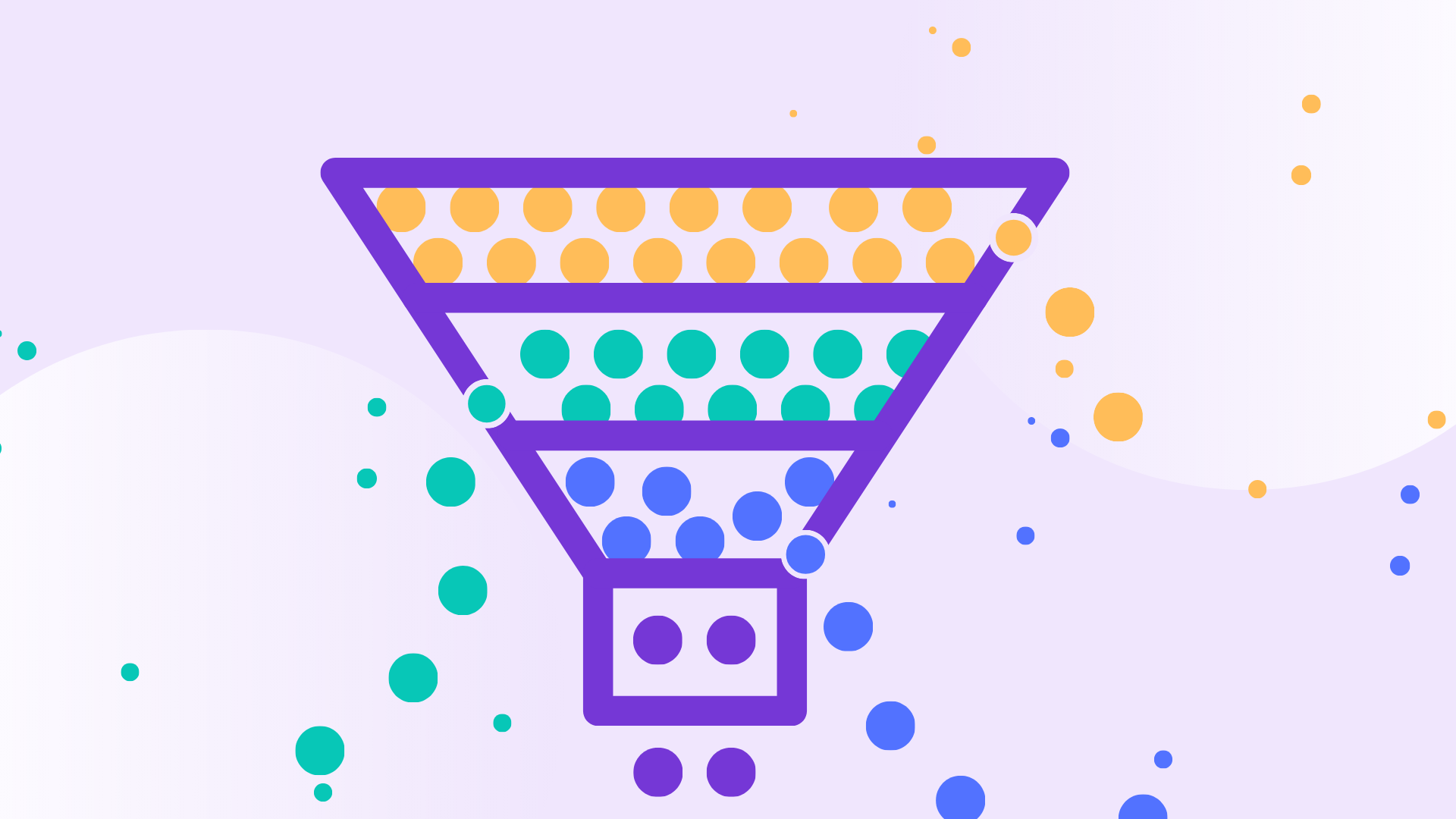
Agentic commerce is shopping done by AI agents on a consumer’s behalf. Instead of browsing and comparing themselves, a shopper tells an assistant like ChatGPT or Perplexity what they need, and the agent searches, evaluates, and increasingly completes the purchase for them. It differs from conversational commerce, where AI helps a human shop; in agentic commerce, the agent is the shopper — reading product data, verifying claims, and selecting from the options it can trust. For brands, that changes the job: the buyer you’re persuading is no longer only a person scrolling a page. It’s a machine reading your data. The funnel below shows where that selection happens, stage by stage.
AI agents are already shaping what consumers see and buy. 70% of consumers have used an LLM to shop in the last three months, and 19% are now purchasing from brands they’d never encountered before those recommendations. But when it comes to making sure your products appear in those results, you’re operating against a black box. Are consumers seeing your products? Are they clicking? How will they purchase in an AI-driven environment?
Demystifying that black box comes down to four stages: AI-ready product data, LLM connection, monitoring and optimization for AI engines, and in-LLM payments. Each one feeds the next. A gap at any stage means a leaky bucket for everything that follows.
With Rithum, you can address each stage of the agentic commerce funnel today and prepare for where the space is heading next.
Bad catalog data keeps products out of AI recommendations
AI shopping agents match product attributes against a shopper’s query. Missing specifications, inconsistent formatting, or outdated inventory signals knock products out of results entirely.
When an AI assistant returns incorrect product information, shoppers blame your brand. Catalog quality becomes a brand trust issue, not just an operational one. Find out exactly what it’s costing you.
The work on catalog structure, attribute coverage, and category alignment usually happens earlier in this process. Tools like Catalog Assist and Magic Mapper focus on those areas, handling attribute gaps and cross-channel categorization so product data is usable across AI-driven environments. With your catalog complete, structured, and current, you can tackle the remaining stages of the funnel with reliable inputs.
Scraped data adds risk you cannot control
AI platforms still rely heavily on crawling websites, marketplace listings, and third-party sources to assemble product information. Inconsistencies follow. Pricing, availability, and product descriptions can all drift away from the current state of your catalog.
When that happens, the AI response reflects whatever information it was able to gather, not the current reality of your inventory. Very few shoppers click through to verify those details elsewhere, which turns the AI output into the primary version of the product.
Rithum replaces that with direct, structured feeds into AI platforms. Rithum’s ChatGPT and Perplexity Feeds get your product data live and accurate on LLMs in three steps: your data is compiled into a feed, that feed is optimized for LLMs, then delivered directly for ingestion. Your brand owns its presence on LLMs instead of leaving it to crawlers.
Rithum’s Stripe partnership extends this further by allowing brands to connect once and distribute product data across multiple AI platforms as they come online. Instead of building new integrations for each new surface, you can test across an assortment of LLMs and understand the ROI, all while keeping your product data updated and aligned.
Getting into the system is not the same as getting selected
AI-generated responses return a limited set of recommendations. Products compete for inclusion in that shortlist, and small differences in product data, relevance, or confidence signals can determine which products appear.
Your feed is not a set-it-and-forget-it deliverable. You need to understand how your products are ranking across AI platforms and how those rankings shift over time.
Our upcoming GEO (generative engine optimization) capabilities provide a way to track how products appear, move, and compare within AI-driven results.
But monitoring only addresses half of the equation. Once you understand how you’re ranking, you need a way to improve those rankings.
Rithum’s upcoming Performance Lab translates those signals into specific optimizations to improve how products appear in LLMs. Between GEO and Performance Lab, brands can move from “live but invisible in recommendations” to earning placement where it actually drives revenue.
Because Rithum connects monitoring and catalog management in one place, you can act on performance signals directly. No exporting data, no cross-referencing tools, no guessing what to fix. There are plenty of myths about how agentic AI actually works. One of the most costly is assuming that presence alone drives results.
Agentic checkout infrastructure is taking shape
Payment is the final stage of the funnel: a shopper completes a purchase inside the same environment where they found the product.
The current state of in-LLM checkout is uneven. Some platforms are testing in-conversation transactions, others are still building toward it, and some LLMs, including ChatGPT, have moved away from native in-chat checkout toward third-party app integrations instead.
Rithum’s Stripe partnership provides the infrastructure for this layer. Product data flows from Rithum into AI platforms. When a transaction occurs, Stripe processes the payment while Rithum handles the necessary inventory updates and order orchestration. The brand stays the merchant of record and retains control of the post-purchase experience.
Google’s UCP, available through Rithum’s Google Shopping feeds, opens another route, allowing brands to opt products into agentic checkout through AI-enabled search and Google Shopping, with support for loyalty programs and order management.
Checkout only functions when the upstream stages are already working. Catalog data, platform access, and product-level performance all shape whether a shopper reaches the point of transaction. Getting those right now is the most direct path to capturing agentic commerce revenue as it grows.
Rithum connects the full agentic commerce funnel
Agentic commerce does not reward partial readiness. Every stage you leave unaddressed leaks value from the funnel. The teams gaining ground are the ones connecting these stages rather than running them as separate workstreams.
Rithum and its upcoming agentic commerce capabilities connect these stages inside a single platform. Catalog improvements flow into AI feeds. Feed performance is measured. Optimization updates feed back into the catalog. When transactions occur, performance signals inform the next set of improvements.
That full loop runs on one of the largest commerce datasets available: $50B+ in annual GMV, billions of SKU updates, and 3 out of 4 AI-driven optimizations accepted by clients. The scale and breadth to cover the full funnel from product data to AI-driven sale, in one system.
Talk to our teamAgentic commerce FAQ
Is agentic commerce the same as AI shopping? They overlap. AI shopping usually describes consumers using AI tools while they shop; agentic commerce describes the agent acting for them — researching, comparing, and buying with minimal human input.
What is agentic shopping? The consumer side of the same shift: delegating a purchase task (“find me a stroller under $400 with good safety reviews”) to an AI agent and acting on its answer.
What do brands need to do about it? Make product data verifiable. Agents check availability, pricing, delivery claims, and reviews against structured sources — a product an agent can’t confirm is a product it won’t select.