Back to all
Multichannel commerce works better on a network: why every channel you add makes the rest smarter
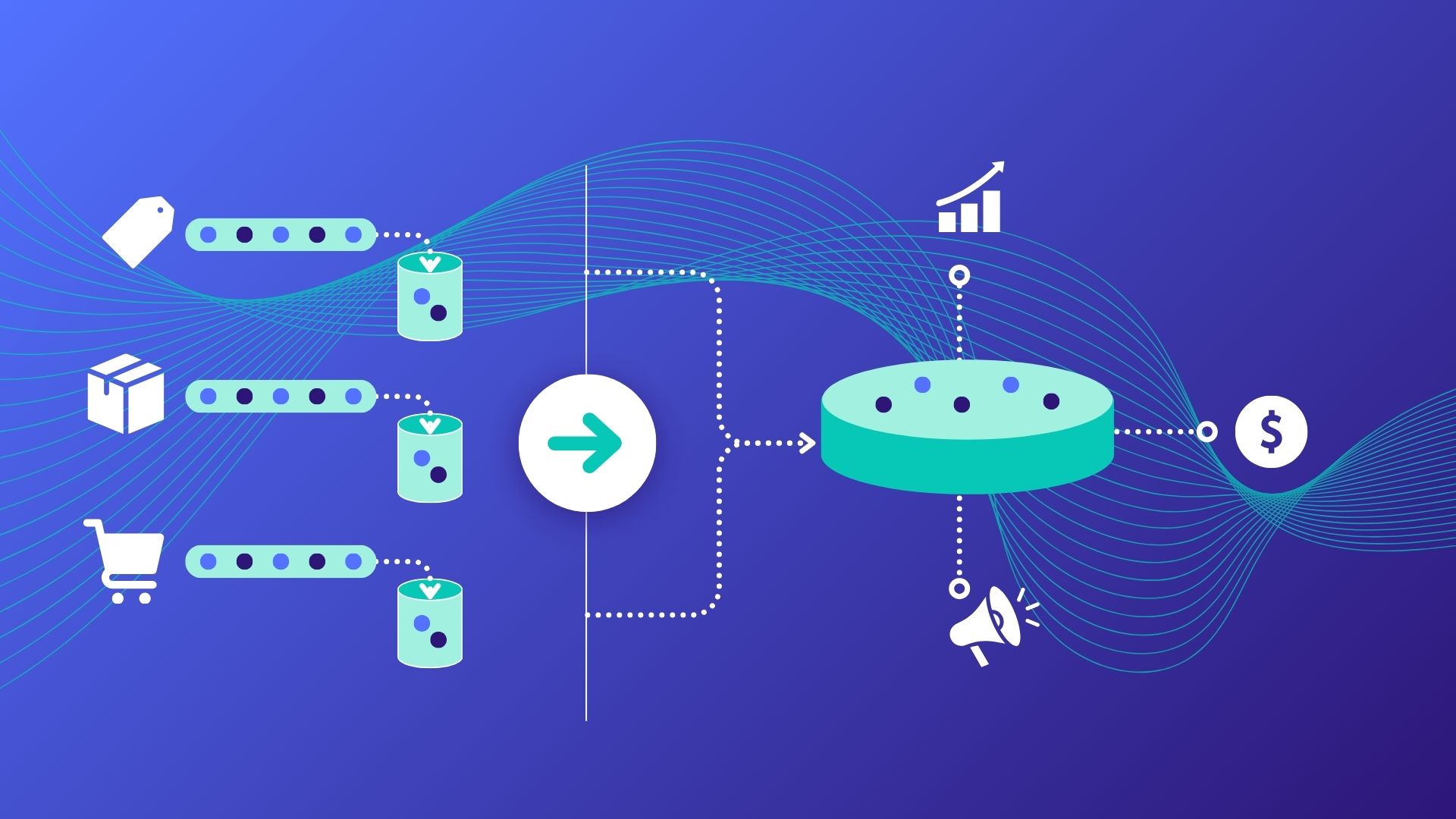

A network-first retailer runs multichannel commerce on a shared network instead of a stack of one-to-one integrations. The channels are the same. The suppliers are the same. What changes is what happens to the data. On a network, every transaction teaches the whole system, so each new channel, seller, and touchpoint improves the rest.
Add a tenth channel to an integration stack and you have ten systems to maintain. Add it to a network and the other nine get smarter.
The short version
- A network-first retailer runs multichannel commerce through shared infrastructure that learns from every company on it.
- A point-to-point integration moves data. A network learns from it.
- Rithum’s network connects 40,000+ brands and retailers across 900+ channels. RithumIQ, the AI engine inside the platform, trains on $50B+ in annual GMV and 2.4B+ daily transactions.
- AI assistants now drive product discovery, and they reward the clean, complete data a network enforces.
- Each participant makes the network’s predictions sharper. That advantage can’t be built one integration at a time.
What multichannel commerce is, and where it stalls
Multichannel commerce is selling the same catalog across several sales channels at once: marketplaces, retail dropship programs, social storefronts, and your own direct-to-consumer webstore. The standard multichannel strategy treats each channel as its own project. You build the integration, launch, and move on to the next one.
That strategy stalls for a predictable reason. Every connection brings its own listing requirements, order flows, and failure modes, so the operational load grows with the channel count.
Connect a brand to a marketplace and you get a pipe. Product data flows out, orders flow back. The pipe works, and it learns nothing. It can’t tell you which listing format the channel quietly started rejecting last month, or whether the supplier you’re about to onboard ships on time for anyone else.
A network sees those things because thousands of companies run the same operations through the same infrastructure. When one seller’s listing gets rejected, the rule behind it becomes known. When millions of packages move, carrier performance stops being a guess. The knowledge belongs to the network, and everyone on it inherits it.
How a network centralizes product data, inventory, and orders
Network-first starts with centralization. The catalog lives in one place and gets reformatted to each channel’s requirements. Inventory holds one accurate position that stays in sync across warehouses, marketplaces, and sales channels, so a sale anywhere updates availability everywhere. Orders from every channel route through one flow to the right fulfillment point.
Any platform can centralize your own data. Centralizing on a network adds what your data alone can’t supply: the requirements, formats, and failure patterns of every channel, learned from everyone who sells there.
The scale behind the argument
Rithum’s network connects more than 40,000 brands and retailers across 900+ channels. The activity running through it, more than $50 billion in annual GMV and more than 2.4 billion transactions a day, is the training data for RithumIQ, the AI engine built into the platform.
An AI engine is only as good as what it learns from. Train it on one company’s history and it can describe that company’s past. Train it on a network’s and it can predict a delivery date before checkout or flag a margin leak before the monthly report does.
That gap is the moat. A competitor can build another integration. It can’t recreate two decades of transaction history across hundreds of channels, and it can’t shortcut the volume that keeps those predictions current.
What the network does with what it learns
Channel launches
The requirements of 900+ channels are already mapped inside the network. Rithum’s Magic Mapper reformats product data to match each channel’s specs, cutting launch time from months to days, so revenue from a new channel starts sooner. Every seller who launched before you already surfaced the errors you would otherwise find one rejection at a time.
Delivery promises
Delivery Date Prediction shows shoppers an arrival date before they click buy. The prediction draws on shipment outcomes across the network, a sample no single retailer’s shipping history could match.
Supplier vetting
Retailers expanding third-party assortment through dropship don’t have to onboard strangers. SupplyExplorer surfaces suppliers whose fulfillment record is already visible across the network, so the vetting happened before the first conversation.
Demand signals
RithumIQ reads which products perform on which channels and predicts where a catalog can increase sales next, because it watched similar products succeed and fail across the network first.
AI shopping raises the price of thin data
Product discovery is moving into AI assistants. Seventy percent of shoppers used AI to shop in the past three months, according to The new discovery engine, Rithum’s research with Retail Dive. Those assistants assemble the agentic shelf, the short list of products they recommend, from product data alone. Incomplete or inaccurate listings get excluded before a shopper ever sees them.
A network improves your odds of qualifying. Data that satisfies the standards of 900+ channels is already the structured, verified data agentic AI rewards. The same feeds that keep listings live on marketplaces are the feeds that earn recommendations, and optimizing for LLM-driven discovery starts from that foundation.
One commerce network, both sides of the shelf
The same network serves the brand listing products and the retailer sourcing them, and each side sharpens the other. Every brand that joins gives retailers more vetted supply. Every retailer that joins gives brands more demand and more performance signal. That is a network effect in the plainest sense. Software can be licensed. The transaction history of 40,000 companies can’t.
Start from what the network already knows
A connection you build alone starts from zero. A channel you add on the network starts from everything the network already learned, which is why growth on a network compounds instead of restarting. Talk to our team about where your products should go next.
Frequently asked questions
What is multichannel commerce?
Multichannel commerce, also called multichannel selling or multichannel ecommerce, is selling products across multiple sales channels at once, such as online marketplaces, retail dropship programs, social storefronts, and a brand’s own webstore, while managing the catalog, inventory, and orders from one place. A brand selling the same products on Amazon, Walmart, TikTok Shop, and its own site is running multichannel commerce. In marketing, multichannel refers to reaching shoppers across several touchpoints; in selling, it refers to transacting across them.
What is the difference between multichannel and omnichannel commerce?
Multichannel commerce runs several sales channels in parallel, each operating as its own storefront. Omnichannel commerce connects those channels into one continuous customer experience, so a shopper can start in one channel and finish in another. Unified commerce goes a step further, running every channel on one platform with a single record of inventory and orders. Most companies build multichannel operations first and layer omnichannel experiences on top.
What is a network-first retailer?
A network-first retailer runs channels, suppliers, and orders on a shared commerce network rather than separate one-to-one integrations. Because the network carries data from thousands of companies, each participant benefits from patterns no single company could see alone.
How does a commerce network make each channel smarter?
Every transaction on the network updates what it knows about channel requirements, carrier performance, supplier reliability, and product demand. A new channel launch starts from that accumulated knowledge instead of from zero. That is the network effect in ecommerce: each new participant improves the system for everyone already on it.
How does network scale affect AI shopping recommendations?
AI assistants build recommendations from product data and exclude listings they can’t verify. A large network enforces the data standards of hundreds of channels at once, which produces the structured, accurate feeds AI systems reward.
What is the difference between a commerce network and an integration platform?
An integration platform connects systems and moves data between them. A commerce network does the same and also learns from the combined activity of everyone on it, returning that learning as predictions and recommendations. Rithum’s network connects 40,000+ companies across 900+ channels.