Back to all
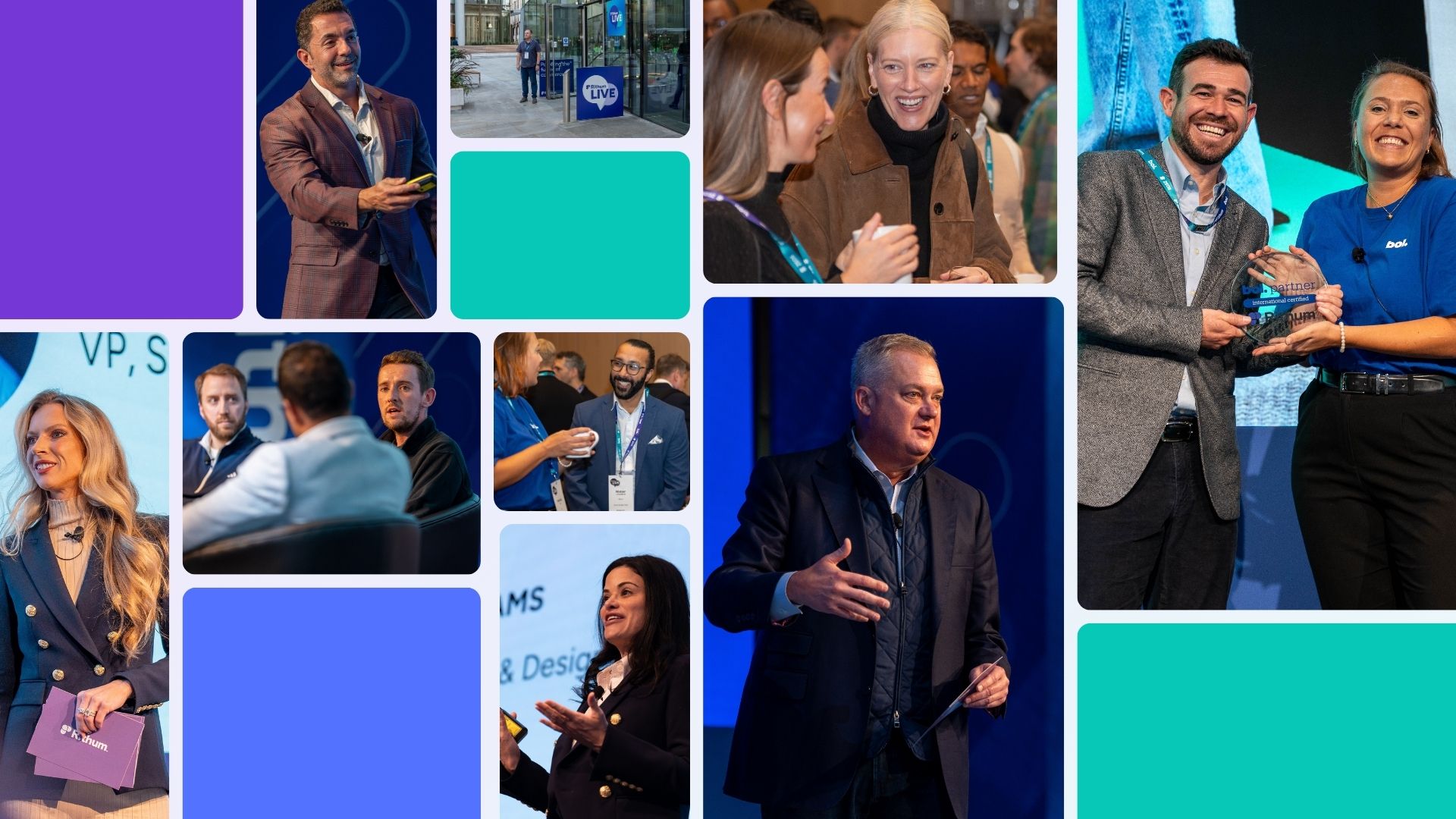

At Rithum LIVE—our flagship event that brought brands, retailers, and partners together in New York and London—the pattern was clear: shoppers are changing how they find products, clean data is more important than ever, AI is everywhere (though not being optimized), and retail media is being redefined. As CEO Lou Keyes put it, “The battleground is shifting from persuasion to precision . . . You can no longer convince consumers to buy with just more ads or louder ads.”
Here are five of our favorite big moments from the sessions, focused on how leaders are fixing data quality, proving AI ROI, preparing for agentic shopping, adjusting retail media, and turning dashboards into decisions. If you’re curious about what’s coming for commerce in 2026, start here—then dive into the full talks on Rithum LIVE On-Demand.
Data readiness: close the confidence–accuracy gap
Suzin Wold Chief Marketing Officer at Rithum, ran a reality check in her Rithum LIVE keynote: “80% of you know the data you are using is bad, while 100% feel confident in your performance reports. You have really super high confidence, but you have really, really low accuracy,” Suzin said. Her rule is straightforward: “It is not about acting faster. It is about reacting smarter.” This takeaway, and the rest of the data analysis from her keynote, was built on The 2026 commerce readiness index, which reports on 200 retail and brand executives’ responses to industry-landscape questions. It points to heavy manual effort and inconsistent data as the root of slow, error-prone reactions. Bad data doesn’t just slow work; it produces the wrong results like mispriced items, wasted ad spend, and higher returns.
Watch Suzin’s full session for more industry trends from the readiness index, which is built on a survey of brands and retailers.
AI and ROI: clean inputs, measurable outcomes
95% of AI projects fail to deliver ROI and only 5% move beyond pilots, Ali Irturk, Chief Technology Officer at Rithum, said. “If you have bad data you’re going to make bad decisions a lot faster.”
Here’s what it looks like for retailers and brands when the inputs are right. “We found that 200 SKUs were driving 15.5% of the returns,” said Seb Spiegler, Head of AI at Rithum, in discussing one Rithum client use case. Updating titles, materials, and size charts fixed the problem. “Returns went down, margins went up,” Seb said.
Rithum’s Magic Mapper, powered by RithumIQ, cut categorization and attribute mapping from days to minutes in 100+ channels and in more than 30 languages, Seb said. Because publishing, inventory, and advertising run on the same source of truth in Rithum, those changes travel quickly to the places that matter. “Models matter, but outcomes matter even more,” Seb said.
Watch Ali and Seb’s session where they show how they spotted the 200 SKUs, which edits they prioritized first, and where the gains surfaced (returns, margin, rank).
Agentic shopping: make claims machine-readable
Discovery is changing as consumer behavior changes. “In the past, [discovery] was user initiated. Now it’s going to be AI agent initiated,” Arun Kumar Global Head of AI at Accenture Song, said. Agentic AI doesn’t react to slogans or ad spend. “Your brand actually is the moat and agents see it as data and rules.” They verify off the website, too: “If you are best in something, I want proof that you are best in something. I’m going to go to Reddit. I’m going to read your reviews.”
Arun suggests that the biggest thing to do now is to encode the facts—materials, price, availability by location, shipping cutoffs, and returns policy—in your website so assistants can confirm them. For the rest of his best practices and examples on getting ready for agentic shopping, watch his session here.
Retail media: let spend listen to inventory and returns
Media works harder when it runs on commerce truth. “We decided to move back and double down on our own platform,” Louis Camassa, Director of Product for the Brands Platform at Rithum, said. “We’re using that data to show where clients could spend and get the best ROI.”
Shelf control completes the loop. “See where you rank, your brand’s share of shelf or share of voice, then make strategic decisions from an advertising and organic perspective,” Meghan Barden, Director of Global Retail Media at Rithum, said. When retail media and commerce data live in one platform, bids and budgets can adjust to stock, margin, and delivery promise in real time, steering spend toward products that can ship and convert. Keeping media and commerce signals together inside Rithum helps avoid wasting spend on items that are out of stock or likely to bounce back.
Watch Louis and Meghan’s session for examples of routing budgets to in-stock, high-margin SKUs.
Decision intelligence: define the choice, then act
“Companies don’t have insight problems. They have decision problems,” Daniel Hulme, Chief AI Officer at WPP, said. Pick the wrong formulation and the option set stretches “longer than the age of the universe.” Pick well and a machine solves it in milliseconds.
The talk reframed AI, saying most companies don’t suffer from a lack of insight—they struggle to turn insight into consistent, high-quality decisions. According to David, our “fast brain” loves intuition. But the real world runs on hard trade-offs where the wrong algorithm can turn a millisecond task into an “age-of-the-universe” problem. He drew a sharp line between automation and AI, where automation just repeats yesterday’s choice. AI, properly defined, is goal-directed and adaptive—it makes a call, learns from the outcome, and updates the next call.
“Large language models are really good at knowing things about the world,” says David. “They are not good at making predictions. They’re definitely not good at making complex predictions.” The business gains show up when you pair them with explainable machine learning and optimization for things like allocations, pricing, routing, and channel mix.
The takeaway was refreshingly human: start by naming the decision you need to get right, be explicit about the objective and constraints, and then choose the method. If AI learns over time and can explain why it works, you’re building intelligence—not just another dashboard. For the full talk, watch Daniel Hulme’s keynote here.
Watch these sessions and more on Rithum LIVE On-Demand here.
Quotes have been lightly edited for clarity.